Garage Door Won’t Open? A Troubleshooting Guide
The most frustrating moment is often when you’re ready to leave, and your garage door simply refuses to budge. You press the remote, flick the wall switch, and… nothing. This guide outlines common reasons why your garage door might not be opening and what you can do before calling for assistance.
Common Causes for a Garage Door Not Opening
Several issues can prevent your garage door from operating. Understanding these can help diagnose the problem:
Power Supply Problems
The most basic reason for a non-responsive garage door opener is a lack of power. Check if the opener unit is plugged into a working electrical outlet. Sometimes, a tripped circuit breaker or a blown fuse can cut power. If the opener has a battery backup, it might have failed, leaving the opener without power.
Remote Control or Wall Switch Malfunctions
The issue could be with your remote or the wall-mounted button. For remotes, dead batteries are a frequent culprit. If you have multiple remotes, try another one to see if it’s a specific remote issue. For wall switches, the wiring could be loose or damaged, or the switch itself might be faulty.
Safety Sensor Obstructions or Misalignment
Nearly all modern garage door openers are equipped with safety sensors located near the bottom of the door tracks. These sensors prevent the door from closing on an obstruction. If these sensors are blocked by debris, dirt, or are misaligned, the opener will refuse to activate or will immediately reverse if it attempts to close. Even a slight nudge can throw them out of alignment.
Mechanical Obstructions or Damage
Something could be physically preventing the door from moving. This could be a fallen object in the path of the door, a bent or jammed track, or a broken component within the opener mechanism itself. Worn-out or broken springs are a significant safety concern and will prevent the door from opening or closing properly, often with a distinct snapping sound.
Opener Mechanism Issues
Internal components of the garage door opener, such as the drive chain, belt, or gear, can wear out or break over time. This can lead to the opener motor running but the door not moving, or the opener making unusual noises without any door movement.
How Garage Door Repair Work is Performed
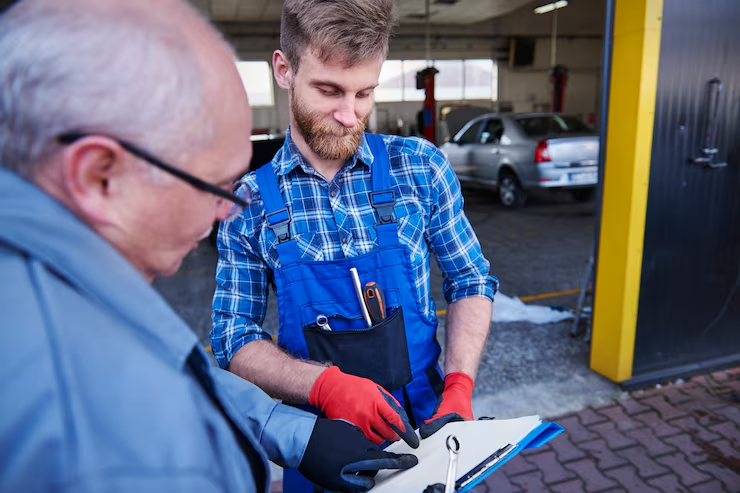
When you contact a local independent provider for assistance, they typically follow a systematic approach to diagnose and repair your garage door:
Initial Assessment and Safety Check: The provider will first visually inspect the garage door and opener for obvious damage or obstructions. They will also check the condition of springs, cables, and tracks, ensuring the system is safe to work on. If the door is manually operated, they will verify it can be moved freely and safely.
Power and Electrical System Diagnostics: They will test the power supply to the opener, check circuit breakers, and inspect wiring for any issues. If battery backup is present, its functionality will be assessed.
Remote and Control System Testing: Remotes will be tested, and batteries replaced if necessary. The functionality of the wall-mounted button and any keypads will also be verified. They can reprogram remotes if needed.
Sensor Alignment and Troubleshooting: Safety sensors will be checked for obstructions, cleaned, and precisely realigned. Wiring to the sensors will also be inspected.
Mechanical Component Repair or Replacement: If the issue lies with mechanical parts, such as broken springs, worn-out rollers, damaged tracks, or faulty opener gears, these will be repaired or replaced. For spring replacement, professionals use specialized tools to safely handle the high tension involved. This is a critical safety procedure.
Opener Mechanism Servicing: The drive system (chain, belt, or screw drive) and motor will be inspected. Lubrication, adjustments, or replacement of worn components will be performed as needed to restore smooth operation.
Testing and Final Adjustments: Once repairs are completed, the system will be thoroughly tested to ensure the door opens, closes, and reverses correctly. Safety features will be re-verified, and any necessary adjustments to travel limits or force settings will be made.
What to Check Before Hiring a Provider
Before you reach out for professional help, performing a few basic checks can sometimes resolve the issue or at least help you communicate the problem more effectively:
- Check the Power: Ensure the garage door opener is plugged into a working outlet. Look at your home’s circuit breaker panel to see if the breaker for the garage door opener has tripped.
- Inspect the Tracks: Visually scan the garage door tracks for any obvious obstructions like rocks, tools, or debris. Check if the tracks appear bent or misaligned.
- Examine Safety Sensors: Look at the small sensors located near the bottom of the door tracks. Ensure they are clean and that the indicator lights on both sensors are lit. If one light is off or flashing, they may be misaligned or blocked.
- Test the Manual Release: Most openers have a manual release cord, usually a red rope hanging from the opener unit. Pulling this cord disengages the opener from the door, allowing you to lift it manually. If the door is very heavy or won’t move even when disengaged, it points to a significant mechanical issue like broken springs or cables.
- Check Remote Batteries: Replace the batteries in your garage door remote with fresh ones.